Walls of Jerusalem Guided Walk
Archived tour information: This listing was captured on 14 May 2013. It is preserved for reference only; prices, departures and bookings are no longer available through the former operator website.
Tour description
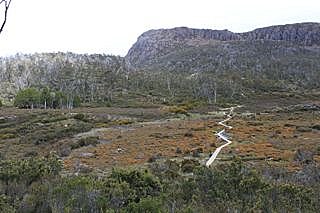
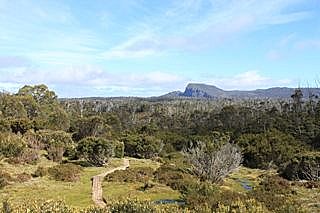
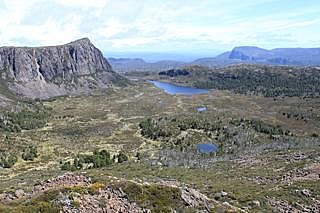
The Walls of Jerusalem National Park in Tasmania was proclaimed in 1981 and is an alpine wilderness of mountain tarns, lakes and dominant peaks. This part of Tasmania is known as the Central Plateau and was formed by uplifting and glaciation.
The landscape includes dolerite peaks, serene mountain tarns and unique alpine vegetation. Wildlife commonly seen includes Bennett's wallabies, pademelons, wombats, possums, spotted and eastern quolls, and Tasmanian devils.
The six-day trek operated during the warmer months from November through April, although the weather can still be changeable. The walking requires a medium level of fitness. Walkers were expected to carry a pack weighing around 15–16 kg.
Itinerary
Day 1: Launceston to Wild Dog Creek — 6 km, 3–4 hours
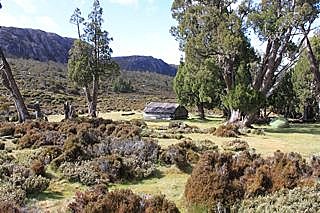
After driving from Launceston, the walk starts at the Mersey Forest Road car park and climbs steadily for 2 km to Trappers Hut, a small shelter used by possum trappers in the early 1900s. From there the track winds past the pristine mountain tarns known as Solomon's Jewels and through woodlands of pencil pines, snow gums and yellow gums. The first night's camp is on tent platforms at Wild Dog Creek, named by surveyor James Scott in 1848.
Day 2: Wild Dog Creek to Dixon's Kingdom Hut — 4 km plus side trips, 6 hours
A short climb through Herod's Gate enters the Walls of Jerusalem. The West Wall and King David's Peak rise to the right, while Lake Salome and the Pools of Bethesda lie to the left. After resting among ancient pencil pines at the Pools of Bethesda, the route climbs to Damascus Gate. Packs are stowed for a climb to Solomon's Throne. Time permitting, the walk also takes in King David's Peak and The Temple before reaching camp at Dixon's Kingdom.
Day 3: Dixon's Kingdom
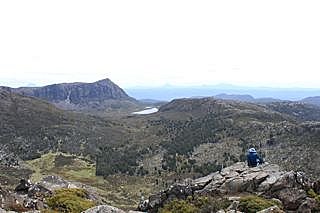
A more leisurely day includes a climb of Mount Jerusalem, the park's highest peak at 1,459 metres. The summit gives broad views over the Central Plateau and towards Frenchmans Cap and Cradle Mountain.
Day 4: Dixon's Kingdom Hut to Lake Adelaide — 6 km, 3 hours
The route passes through the pencil pines of Jaffa Vale and descends to Lake Ball. A restored trapper's hut beside the lake recalls the area's early European explorers, bushrangers and trappers. The walk follows Lake Ball's northern shore, crosses a small saddle, and reaches camp at the northern end of Lake Adelaide. At 1,055 metres, Lake Adelaide is the largest lake on the walk.
Day 5: Lake Adelaide to Lake Meston — 7 km, 4 hours
An easy track follows Lake Adelaide through timber and gradually changing eucalypt woodland. The highland lakes contain galaxiids, and platypuses also inhabit the lakes and tarns. Camp is at the picturesque northern end of Lake Meston, with views of the Traveller Range beyond.
Day 6: Lake Meston to Launceston — 9.5 km, 6 hours
The final day's walk follows Lake Meston's western shoreline, then heads north past Lakes Myrtle and Bill to Mersey Forest Road. Mount Rogoona offers a final challenge for determined peak baggers. Waiting transport returns the group to Launceston.
What was included
National park passes, two guides, transport from and back to Launceston, food during the tour, emergency equipment, tents and cooking equipment.
What walkers needed
The archived listing said that a gear list was issued after booking. It included a sleeping bag and mat, warm clothing, wet-weather gear, a torch, backpack and toiletries. The tour was not considered suitable for children.
Source: archived ToursToGo listing captured by the Internet Archive on 14 May 2013. Text has been lightly reformatted for readability; booking controls and inactive commercial links were removed.