

Cycling Tasmania
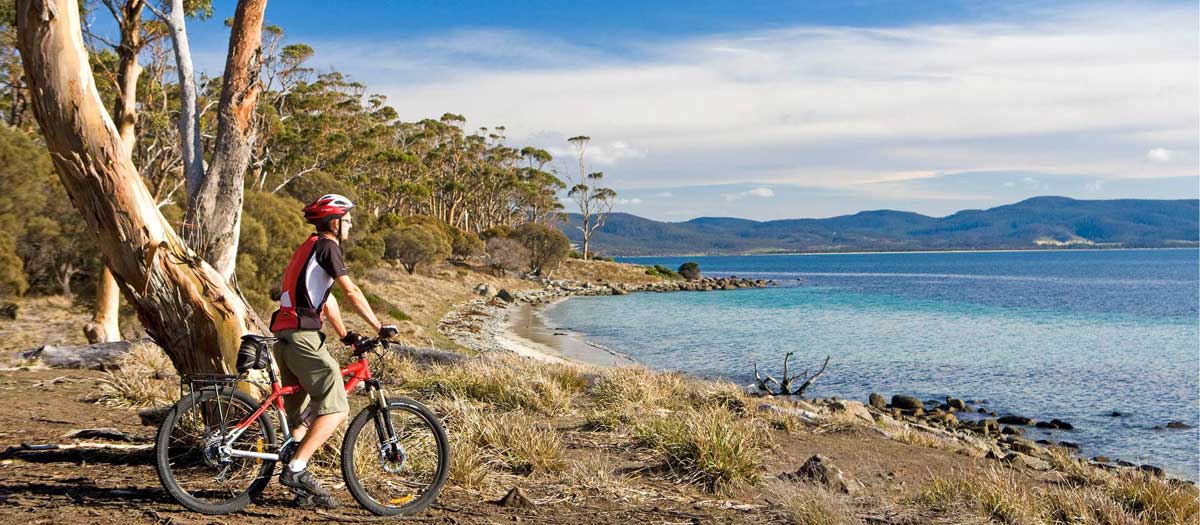
Australia's smallest state both in area and population, Tasmania has stunning scenery and good-quality, mostly lightly trafficked roads. These plus relatively short distances between towns and services, make Tassie an ideal region for cycle touring.
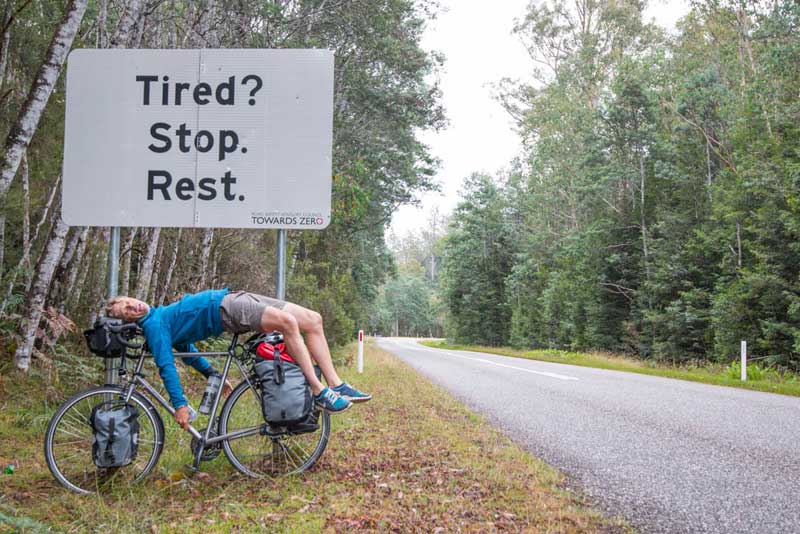
A temperate southerly latitude and long summer days means comfortable cycling conditions and ample time for side trips. Always beautiful, often demanding, Tasmania's terrain is renowned among cyclists for its hills, but effort is rewarded. Cyclists seeking easier terrain should start on the east coast, as the west coast has further distances between towns and more chance of inclement weather.
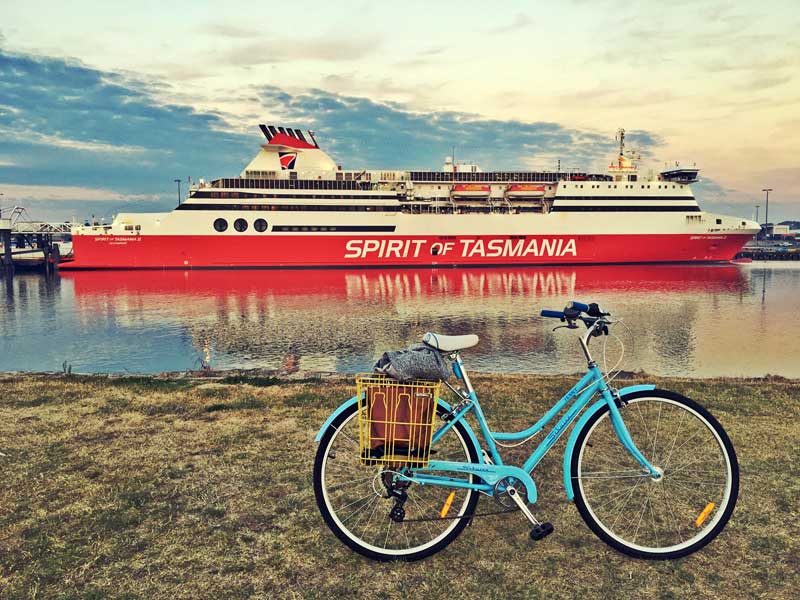
If you are visiting Tasmania, you can bring your own bike on the Spirit of Tasmania ferries, which operate daily between Melbourne, Vic, and Devonport. Charges apply for the carriage of your bicycle.
Alternately, you can hire a bike, helmet and other equipment from a number of operators in Tasmania's major towns as well as book cycling tours. For more information about cycling in Tasmania, visit the Bicycle Tasmania information site.
Rail trails are paths recycled from abandoned railway corridors. They can be used for walking, cycling and horse riding and are generally shared. Following the route of the railways, they cut through hills, under roads, over embankments and across gullies and creeks.
Riding or walking rail trails have many advantages. The most obvious is you are not sharing the pathway with motor vehicles. Another is that they are prefect ways to see the countryside of a region you are visiting or passing through, as they link big and small country towns and meander through scenic countryside just as railways did in the past.
Trains are not good at climbing hills, and railways avoid steep grades by contouring around hills, going through cuttings and tunnels and over bridges and embankment. Even the steepest gradients are gentle in comparison to some roads and tracks, which makes rail trails easy to pass over.

'Where to Ride Tasmania Guidebook' is higthly recommended. Andrew Bain guides readers along 45 of Tasmania's most beautiful rides. The rides range right across the island, from family fun rides in Hobart and Launceston, to long days out on the open road, to singletrack rushes on purpose-built mountain biking tracks.
The book features accurate mapping, altitude profiles, point by point ride logs and a range of ride difficulties from one to five star ratings. One star rides are within the abilities of most casual tourists, young children or beginner cyclists. Five star rides will have experienced cyclists grinning from ear to ear.
A temperate southerly latitude and long summer days means comfortable cycling conditions and ample time for side trips. Always beautiful, often demanding, Tasmania's terrain is renowned among cyclists for its hills, but effort is rewarded. Cyclists seeking easier terrain should start on the east coast, as the west coast has further distances between towns and more chance of inclement weather.
If you are visiting Tasmania, you can bring your own bike on the Spirit of Tasmania ferries, which operate daily between Melbourne, Vic, and Devonport. Charges apply for the carriage of your bicycle.
Alternately, you can hire a bike, helmet and other equipment from a number of operators in Tasmania's major towns as well as book cycling tours. For more information about cycling in Tasmania, visit the Bicycle Tasmania information site.
Rail Trails
As in the other states of Australia, and indeed most developed countries of the world, railways were built across the Tasmanian countryside throughout the 19th century, but modern day road transport has made all but the main lines obsolete. The corridors the train lines followed were abandoned, but in recent times, a new use has been found for many of them - rail trails.Rail trails are paths recycled from abandoned railway corridors. They can be used for walking, cycling and horse riding and are generally shared. Following the route of the railways, they cut through hills, under roads, over embankments and across gullies and creeks.
Riding or walking rail trails have many advantages. The most obvious is you are not sharing the pathway with motor vehicles. Another is that they are prefect ways to see the countryside of a region you are visiting or passing through, as they link big and small country towns and meander through scenic countryside just as railways did in the past.
Trains are not good at climbing hills, and railways avoid steep grades by contouring around hills, going through cuttings and tunnels and over bridges and embankment. Even the steepest gradients are gentle in comparison to some roads and tracks, which makes rail trails easy to pass over.
'Where to Ride Tasmania Guidebook' is higthly recommended. Andrew Bain guides readers along 45 of Tasmania's most beautiful rides. The rides range right across the island, from family fun rides in Hobart and Launceston, to long days out on the open road, to singletrack rushes on purpose-built mountain biking tracks.
The book features accurate mapping, altitude profiles, point by point ride logs and a range of ride difficulties from one to five star ratings. One star rides are within the abilities of most casual tourists, young children or beginner cyclists. Five star rides will have experienced cyclists grinning from ear to ear.
Recommended Rides
Giro Tasmania - 2 weeks: an online Bike Trip around Tasmania ridden by three cyclists over 14 days from 26th December 1998 to 9th January 1999. The ride started in Hobart, and covered over 1,000 km with two rest days, going anti clockwise, in a big loop, finishing back in Hobart 14 days later.Great Western Tiers Cycle Trails: a series of rides through the Great Western Tiers of North West Tasmania. The rides include Mole Creek, Trowunna wildlife park; King Solomon and Marakoopa Caves, Deloraine; Alum Cliffs; Quamby Bluff; Mount Roland. Suitable for single and milti day trips.
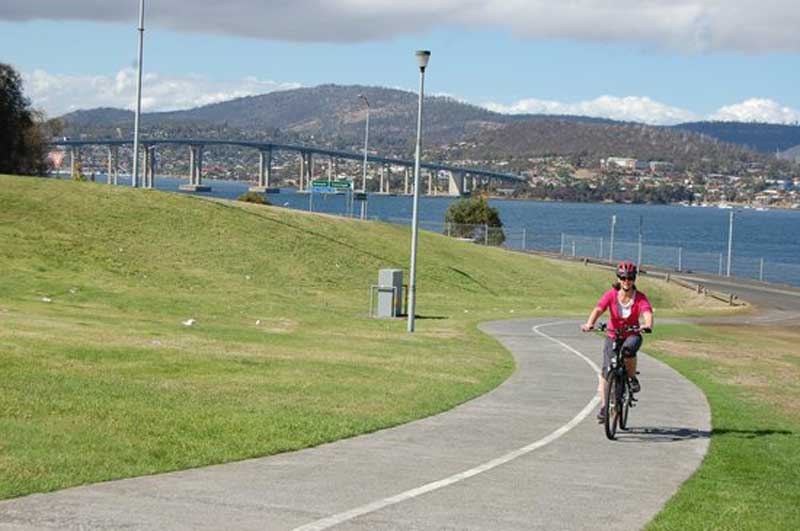
Cycling in and Around Hobart: a series of online and downloadable maps and information.
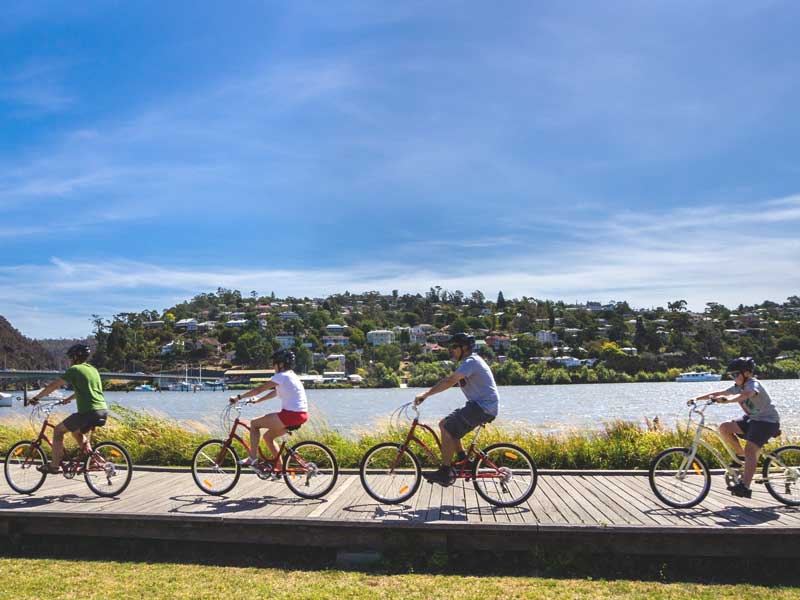
Launceston Trails: online or download information and maps of five popular cycling trails in and around the city of Launceston.
The Tasmanian Trail: the only long distance (480km) multi-use trail in Tasmania. The experience is recreational, cultural and nature based. The Trail offers a unique and exciting opportunity to experience some of Tasmania's most beautiful landscapes that are beyond the popular tourist trails. The trail winds its way between Devonport in the State's north and Dover in the south.

Nine Top Mountain Bike Trails: whether it's a quiet little ride through the bush with mates or some of the most challenging trails on the planet, riders worldwide are making tracks to Tasmania. Ribbons of dirt tracks weave through some of the most spectacular scenery on earth. So grab your helmet and tuck these insider tips firmly in your back pocket before hitting the trails.
Tassie Trails: a website devoted to exploring Tasmania by mountain bike.
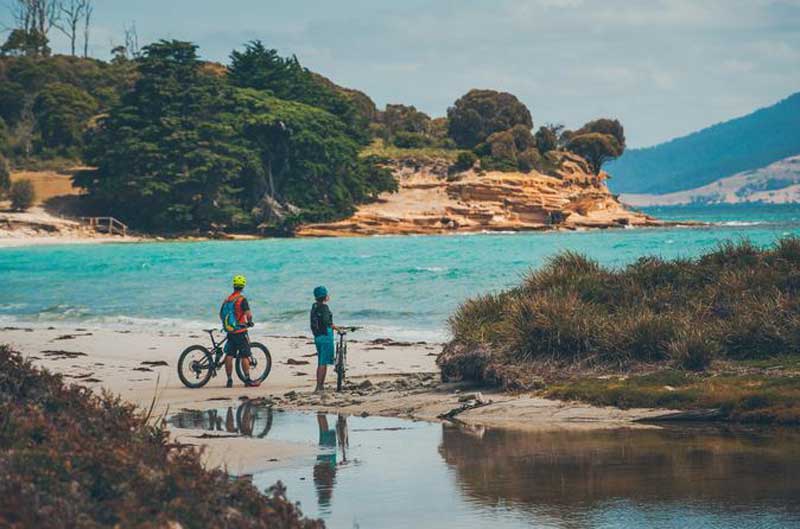
Maria Island: situated on Tasmania's east coast, Maria Island is a great place to visit and there are lots of opportunities to explore on a bike. There are no motor vehicle here, only cyclists and walkers, so you don't have morot vehicle to contend with. The island is famous for its historic buildings and convict ruins as well as its stunning coastal scenery. There are no roads, no cars, no shops, no running water and no one lives there, which is perfect if you want to leave civilization behind for a day.
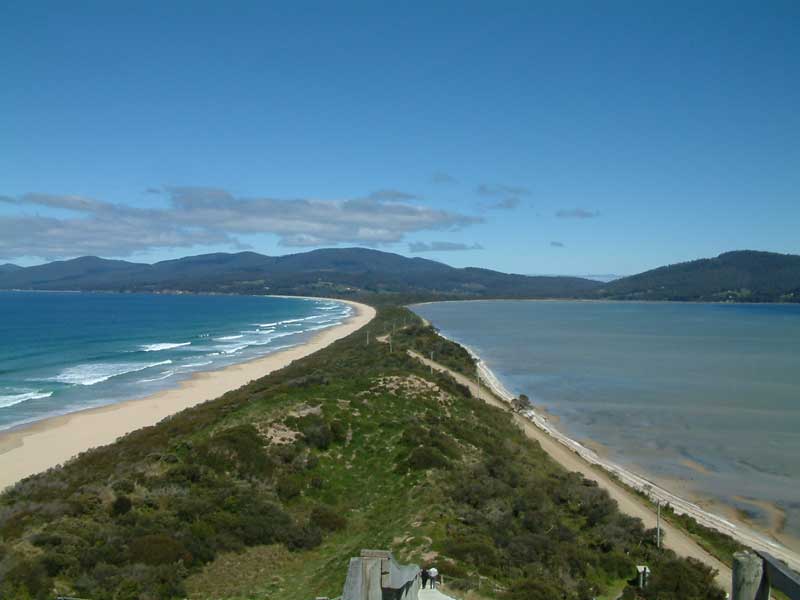
Bruny Island: take the short trip by bicycle from Hobart to Kettering, catch the Bruny Island ferry and you are there, ready to explore one of Tasmania's most interesting islands. Cyclists pay a small fee for the 15-minute trip and ferries go throughout the day. If you are a regular cyclist and want to make a deecent adventure out of your visit to Bruny, you need as little as 3 days to cycle south from Hobart to the island, do a bit of exploring and return, although a week would be better to see more and take things at a more relaxed pace.
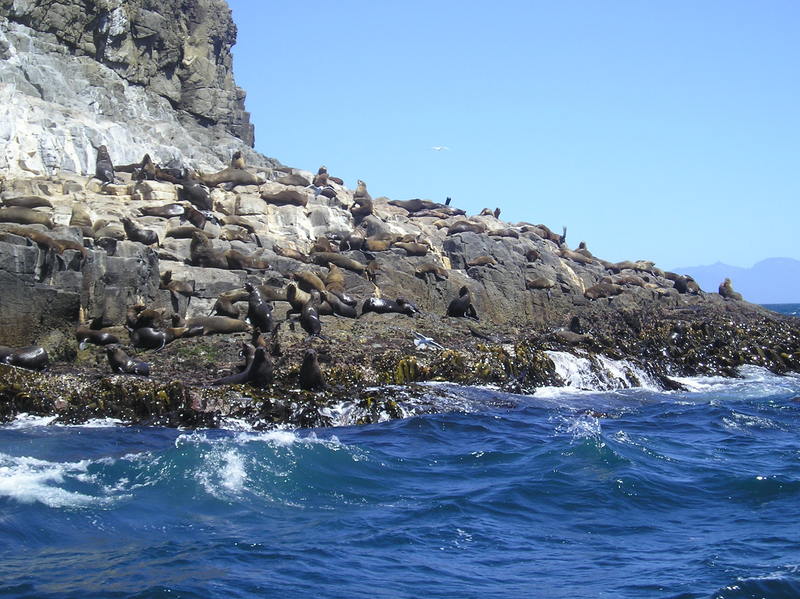
Across the D'Entrecasteaux Channel a short drive south of Hobart, Bruny Island is effectively two quite different islands connected by a narrow neck of sand. With its wild seascapes and sweeping surf beaches, rich maritime history, abundant birdlife and wildlife, tall forests and historic lighthouse, Bruny is an island paradise in Australia's deep south.
The island has an abundance of indigenous birdlife, marsupials and marine life. Whales, seals, dolphins, penguins, sea lions, sea eagles, albatrosses, cormorants, gannets can be seen in their natural environments. A unique feature is its thousand-year old 'blackboy' rainforests and the spring months of September and October reveal spectacular native flowers.
Where Is it?: South of Hobart, by ferry from Kettering on the Channel Highway. Alonnah is the administrative capital of Bruny Island.
In terms of breathtaking majesty, few features on South Bruny Island compare to a series of sea caves found along its rocky coastline. 'Breathtaking' is an over-used word used to describe Australia's scenery, but when it comes to these amazing coastal caverns, it is totally appropriate. The only way to see these caves is by boat; Bruny Island Cruises take tourists close to the huge caves carved by the wind and surf out of the cliff face but if you prefer to see them at close range, then sea kayak is the only way to go.